The Cognitive Mechanism of Comparative Appraisal
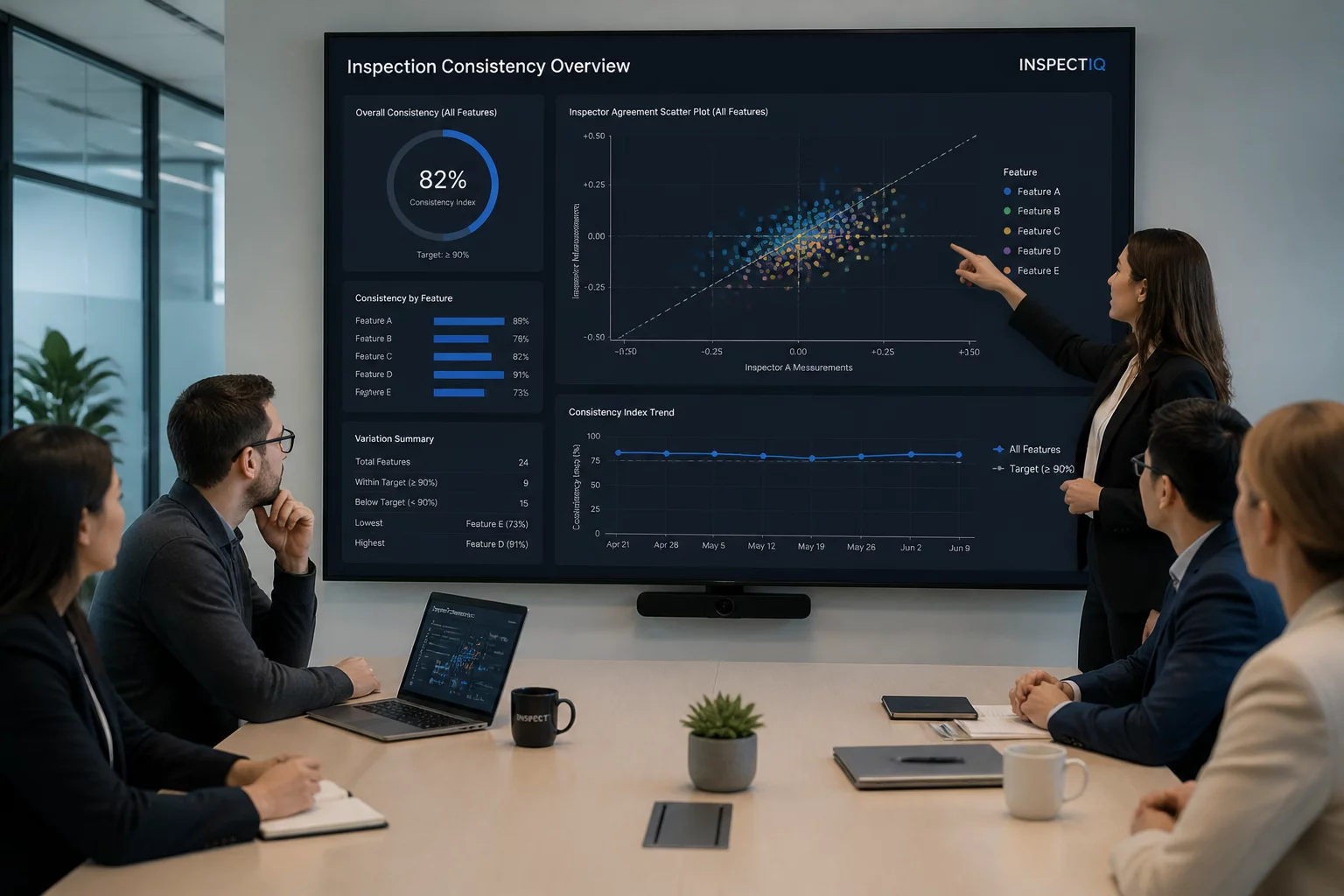
Visual quality control operates through relative comparison rather than internal metric calculation. When an inspector appraises manufactured components without immediate physical benchmarks, judgment drifts according to recent sample exposure. A consecutive run of defective parts naturally lowers the internal acceptance threshold, while an extended sequence of pristine parts renders minor cosmetic irregularities unduly prominent.
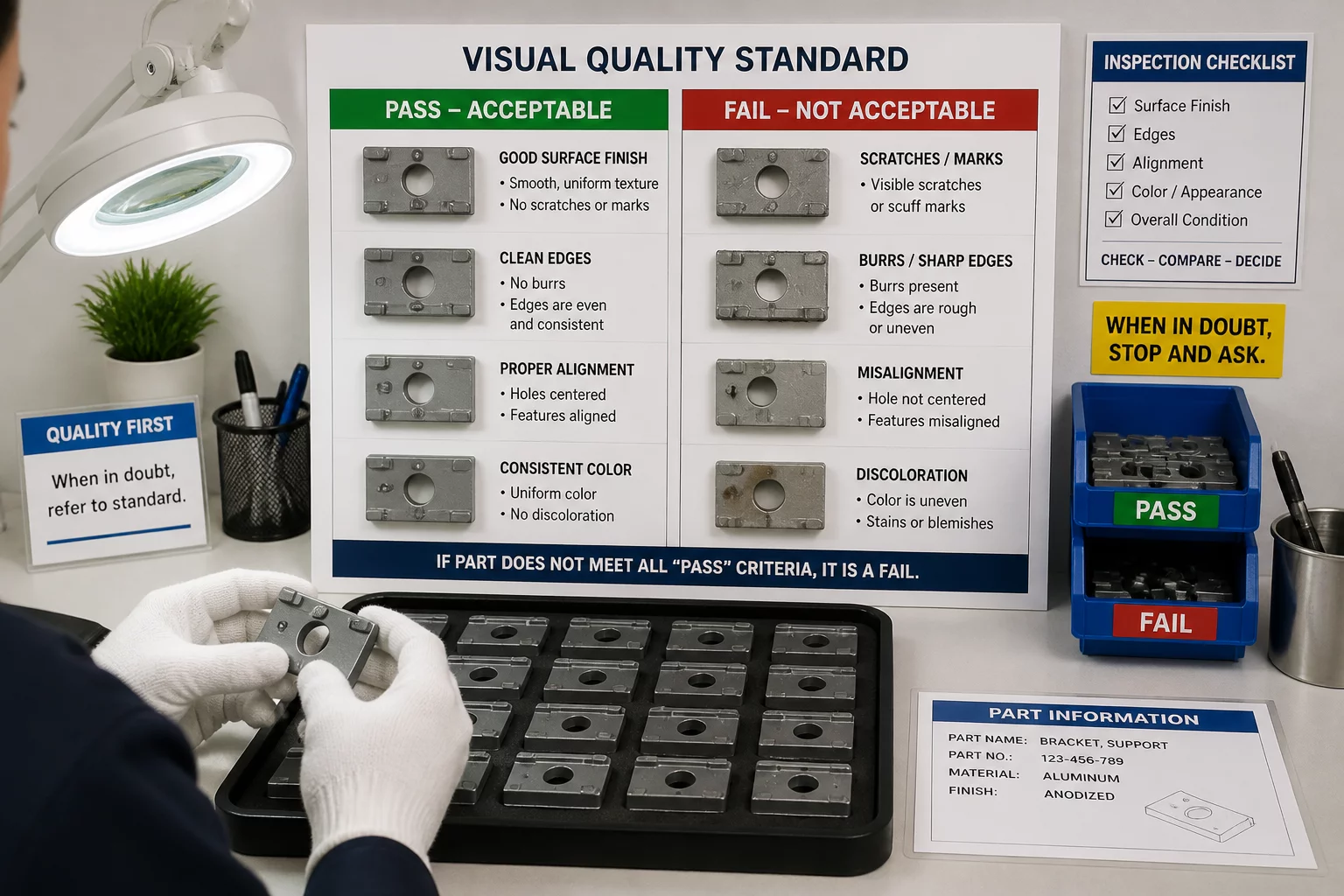
Static reference specimens mounted adjacent to inspection planes counteract this sensory drift by fixing a continuous visual anchor. By positioning physical samples representing the exact borderline acceptance criteria alongside borderline rejection limits, operators eliminate subjective memory recall. Empirical testing across manufacturing lines shows an immediate 38% reduction in classification divergence when tactile limit coupons replace abstract written instructions.
Calibrating Workstation Limit Samples?
Consult with our quality engineering specialists to design tailored physical comparison boards.
Structuring Borderline Verification Displays
Merely placing representative samples on a shelf fails to stabilize inspection outcomes. Photographs in manuals inevitably flatten depth, misrepresent specular reflection, and conceal micro-fissures that inspectors observe under specific angles. Genuine physical coupons encapsulated within anti-glare, climate-protected enclosures preserve tactile texture and real-world optical response.
Operational Guidelines for Visual Reference Mounting
Establishing an effective reference fixture demands meticulous environmental and operational discipline. The following core practices safeguard measurement validity:
- Mount dual borderline specimens side by side to define an explicit perceptual boundary rather than a vague target.
- Enforce scheduled coupon audits to rotate degraded parts before oxidation or surface abrasion corrupts visual appraisal.
- Position reference display panels along the direct line of sight under identical chromatic lux conditions to eliminate lighting disparities.
Standardize Shift Decisions
Deploy validated boundary boards and eliminate cross-shift disagreement.
Key Methodological Takeaways
- Mental benchmarks wander over working shifts, requiring immediate physical references on the inspection bench.
- Effective limit systems showcase paired marginal cases—worst acceptable and least unacceptable—rather than solitary flawless ideals.
- Consistent lighting and periodic replacement cycles are essential to maintain the integrity of physical visual standards.
Related Methodology Studies