Deciphering Concordance Matrices
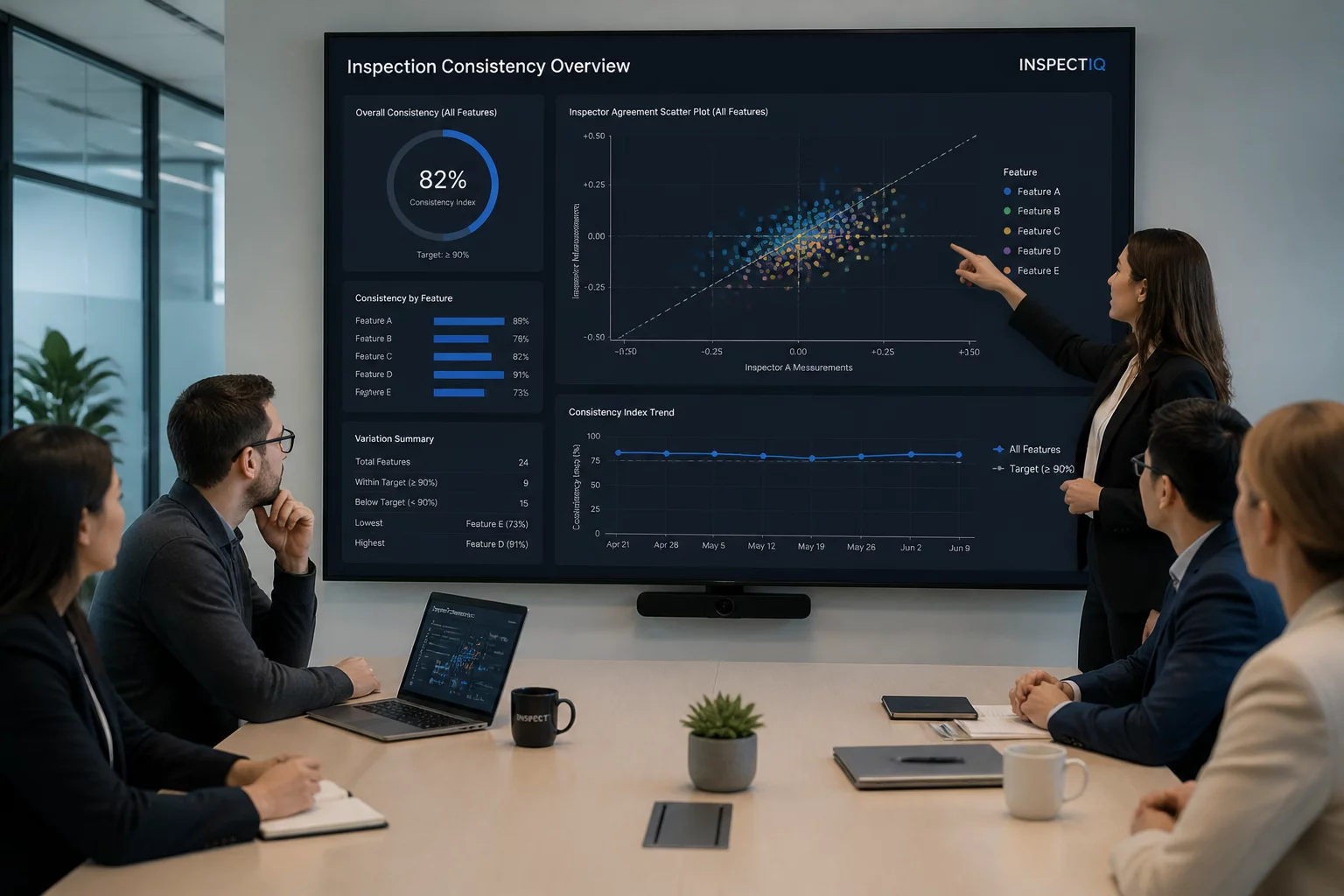
Visual inspection routines produce extensive classification logs, yet quality assurance leaders frequently dismiss minor rating discrepancies as random operator error. When two certified inspectors evaluate identical production units and record conflicting defect codes, those disagreements follow distinct structural patterns. Plotting dual-assessor results onto a confusion matrix uncovers systematic fault lines across procedural standards.
Random operational noise spreads evenly across all defect categories and shows no preference for specific visual boundaries. Systematic disagreement concentrates heavily along adjacent threshold tiers, exposing the exact regions where written specifications fail to convey decisive visual clarity. Analyzing these cluster formations gives engineering leads actionable clarity into whether training revisions, lighting upgrades, or sample anchors are required.
Calibrate Inspection Thresholds
Get expert guidance on isolating inter-rater variance across high-speed visual sorting teams.
Identifying Systematic Skew Versus Stochastic Spread
When variance charts demonstrate directional asymmetry, one group of inspectors consistently ranks marginal surface flaws higher than their peers on alternate workstations. This divergence points directly to ambient illumination drift or divergent peer-group habits rather than innate sensor deficiencies. Distinguishing persistent skew from random inspection chatter allows technical auditors to address the environment first.
Operational Red Flags in Shift Variance Logs
Reviewing historical inspection spreadsheets often reveals telltale indicators of procedural decay across visual quality teams:
- Pronounced clustering along borderline tolerance bands without corresponding mid-tier defect logging.
- Shift-dependent downgrade rates where visual thresholds relax noticeably during final production hours.
- Isolated station disparities traceable to slight angle offsets in supplemental task lighting fixtures.
Need Custom Variance Auditing?
Our analysts review inter-station logging patterns to identify defect classification bottlenecks.
Practical Protocol Rules
- Treat inter-operator disagreement patterns as diagnostic signals regarding procedural criteria, not personal error.
- Pair parallel blind assessments regularly across alternating shifts to capture temporal criteria migration.
- Introduce tangible limit samples at the physical workstation to eliminate memory-based threshold drift.
Related Methodologies