Establishing Shared Perceptual Anchors
Visual inspection teams often rely on subjective mental models developed over years of isolated work. When individual operators judge aesthetic boundaries or structural anomalies independently, minute differences in lighting tolerance, fatigue, and personal risk thresholds create systematic drift. Establishing visual consistency requires replacing tacit assumptions with explicit, calibrated perceptual anchors that make boundary conditions tangible for everyone on the floor.
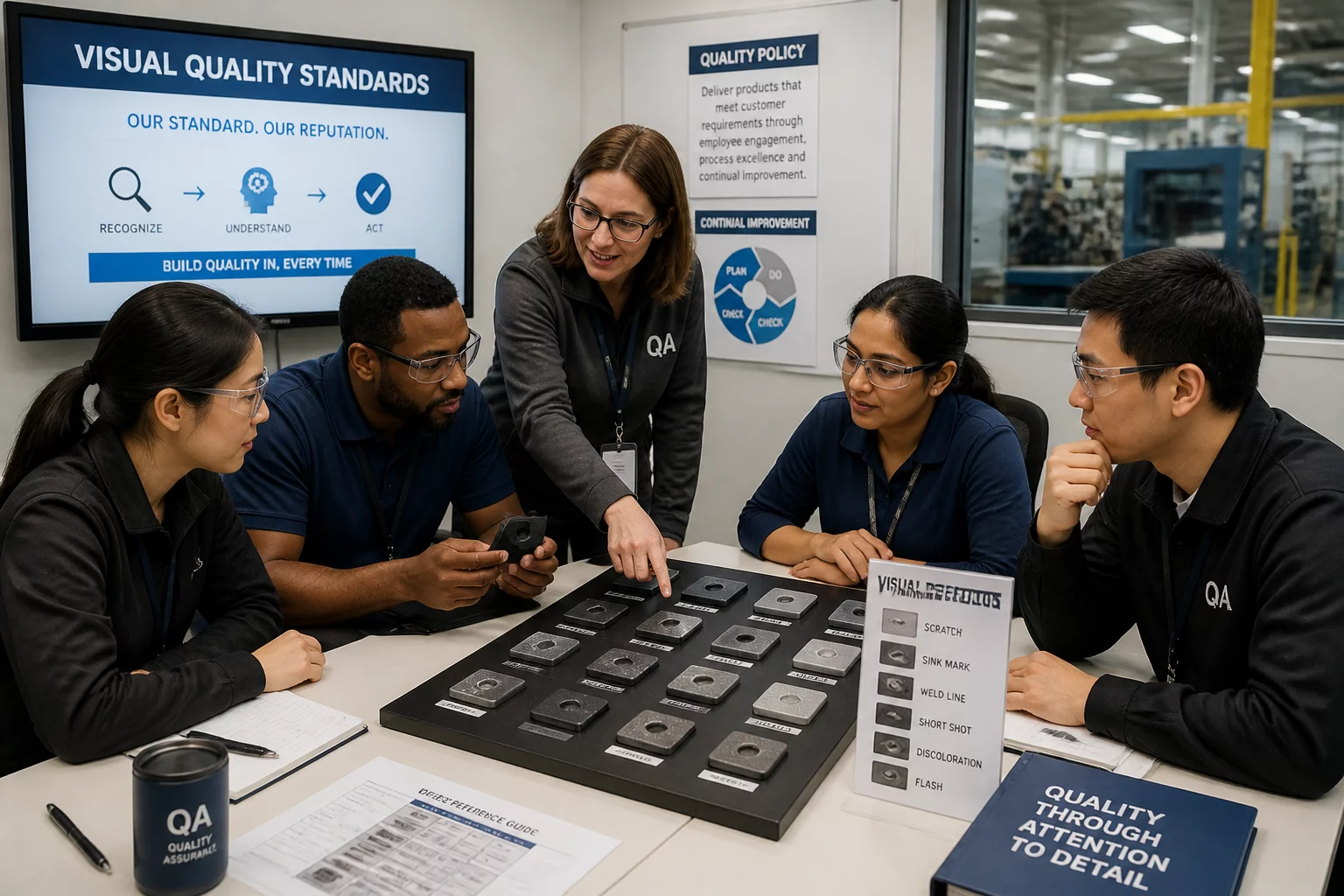
The calibration process begins by identifying borderline specimens rather than obvious passes or fails. Inspectors review contentious samples in structured peer sessions where discrepancies are discussed without immediate penalization. By comparing individual classification rationale against defined reference standards, teams develop a unified vocabulary for subtle defects like micro-scratches, uneven gloss, and hairline voids.
Schedule a Workshop Review
Connect directly with our QA training specialists to calibrate your team's visual inspection procedures.
Structured Exercises for Drift Prevention
Even well-trained QA personnel experience perceptual drift over prolonged evaluation cycles. Routine rotation schedules and periodic blind challenges prevent inspectors from anchoring toward lenient or overly harsh grading tendencies. Running controlled consensus drills ensures team members continually align their internal thresholds with documented quality limits.
Four-Stage Alignment Routine
Implement this structured calibration sequence to establish measurable inter-rater reliability across shifts and production departments:
- Conduct blind classification trials with seeded borderline artifacts at the start of each production cycle.
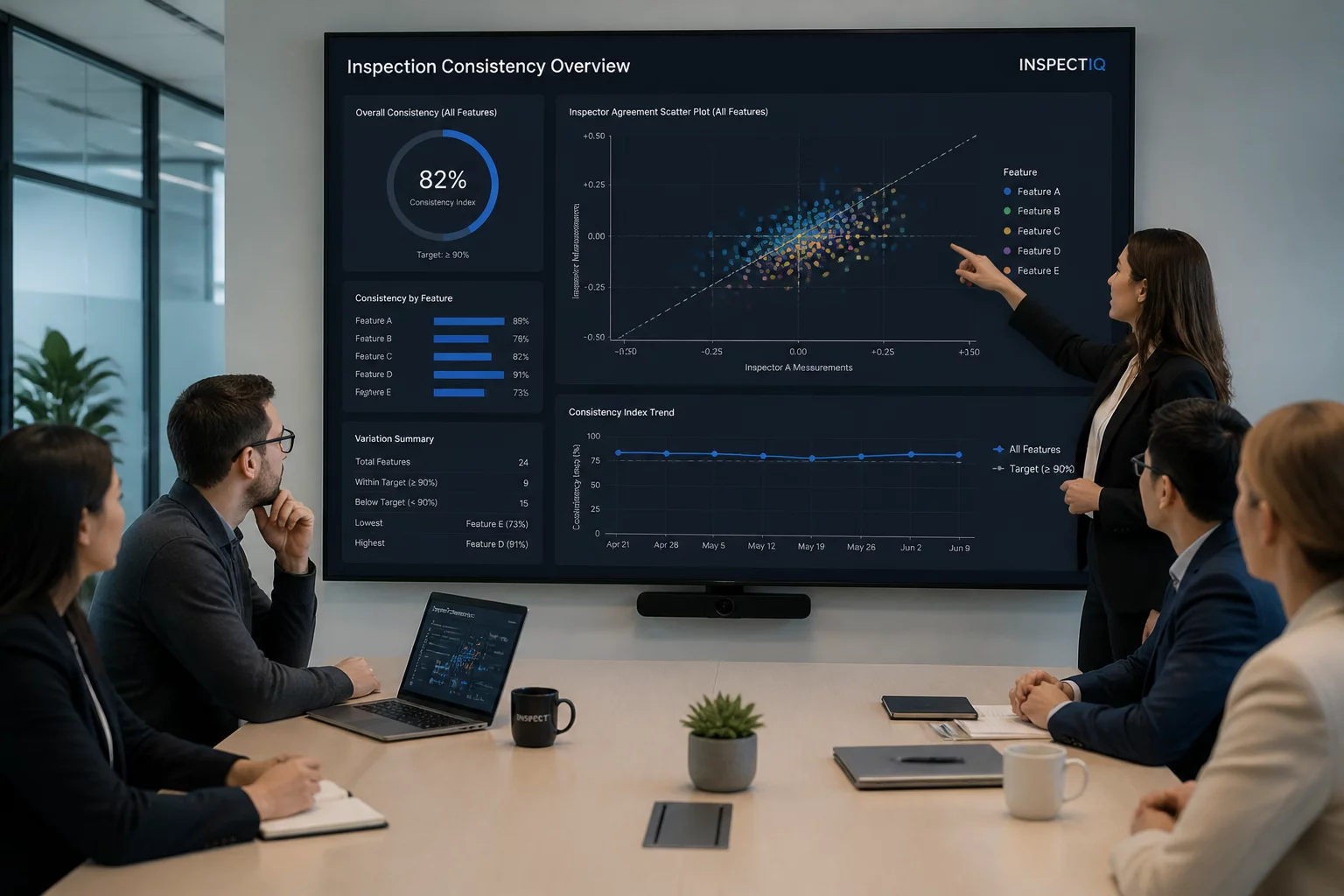
- Measure inter-rater agreement utilizing Cohen's kappa metrics to pinpoint specific defect types with high variance.
- Hold immediate debrief sessions where outliers articulate their criteria and adjust against physical reference limits.
Need Custom Alignment Guidelines?
Our technical team assists QA departments in drafting tailored inspection reference manuals and training exercises.
Key Inspection Takeaways
- Individual judgment naturally diverges without regular cross-operator calibration drills and physical defect boundaries.
- Blind test panels reveal category ambiguities far faster than passive review of standard operating procedures.
- Consistent environmental lighting and standardized presentation angles are mandatory prerequisites for reliable human evaluation.
Related Methodologies